DARK HISTORY
Obersalzberg:
The Forbidden Mountain
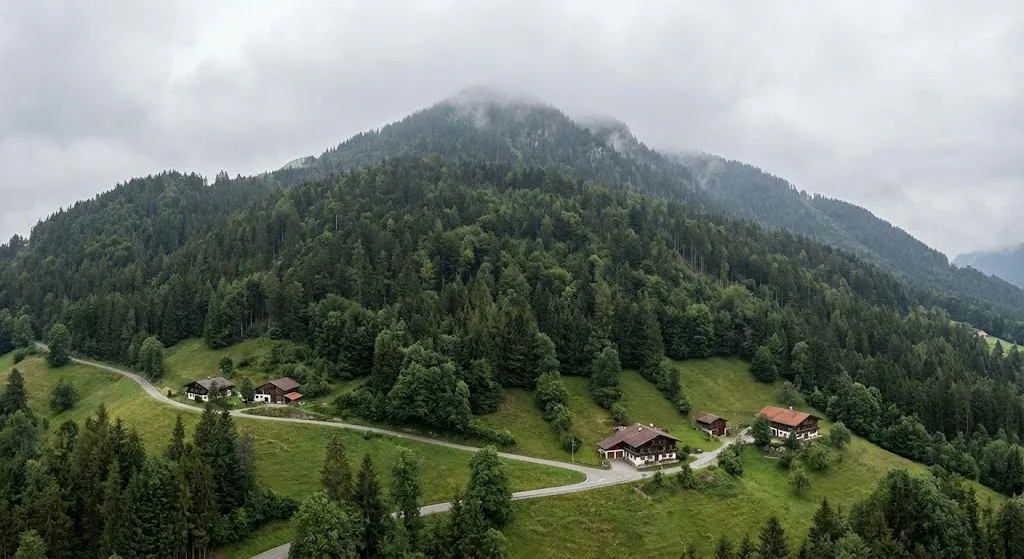
Before you ascend to the Eagle's Nest, you stand on the ruins of the Berghof complex. explore the history of the "Führer's Sperrgebiet," the vast bunker systems, and why the Eagle's Nest was spared from bombing.
Zone
Führer Sperrgebiet
Museum
Documentation Center
Bombing
April 25, 1945
Altitude
1,000 meters
The Berghof vs. The Eagle's Nest
A common misconception is that the Eagle's Nest was Hitler's home. It was not. His actual residence was the Berghof, located further down the mountain on the Obersalzberg plateau. The Berghof was the seat of power where world leaders were received and decisions were made.
On April 25, 1945, the Royal Air Force bombed Obersalzberg, turning the Berghof and the SS barracks into ruins. The Eagle's Nest, perched high on the summit ridge, was incredibly difficult to target and was left largely untouched, perhaps as a trophy for the approaching Allied land forces.
Hidden History
The Underground City
Beneath the idyllic alpine meadows of Obersalzberg lies a massive network of tunnels and bunkers. Designed to shelter the Nazi elite during air raids, this subterranean city included apartments, offices, and machine gun nests.
Today, you can access a portion of these tunnels through the Dokumentation Obersalzberg museum. Seeing the unfinished, damp tunnels gives a chilling sense of the paranoia that gripped the regime in its final days.
Visitor Tip
The Documentation Center is located exactly where you park for the Eagle's Nest bus (P1). We strongly recommend visiting it after your summit trip to fully understand what you just saw.

The 'Souvenir' Hunters
After the Americans took the mountain in May 1945, a frenzy of looting began. It wasn't just soldiers—locals climbed up to grab whatever they could. Huge depots of wine, champagne, and cognac were drained. Furniture, door handles, and even pieces of the marble walls were stripped.
In the 1950s, this turned into a bizarre business. Entrepreneurial locals would stand by the ruins selling "Original Stones from Hitler's Living Room" for 3-5 Marks. It was "tourism on quiet soles"—a dark, unregulated gold rush before the government finally stepped in.